The Deposit Return Scheme Explained: What's Coming in 2027

October 2027 might seem far away, but for UK businesses that sell drinks in single-use containers, it's a date worth marking in your calendar.

That’s when the Deposit Return Scheme (DRS) comes into effect across England, Northern Ireland, and Scotland. Wales is developing its own version, but it'll work alongside the scheme in the rest of the UK.
If you’re unfamiliar with DRS or unsure about how it might affect your business, you’re not alone. For many years, the scheme has been in discussion and pushed back, with the announcement earlier this year. Many businesses are only now starting to understand what it actually means for them.
DRS represents a significant shift in how single-use drink containers are managed, which means new processes, responsibilities, and considerations for businesses.
Key Takeaways:
Businesses selling single-use drink containers will need to adapt to new responsibilities and infrastructure to ensure compliance with the scheme
Everyone will play an important role in increasing recycling rates and reducing litter to support a circular economy
Staying informed on guidance and learning what other countries are doing will help businesses implement a DRS smoothly and effectively
What is the Deposit Return Scheme (DRS)?
Simply put, the DRS will add a small refundable deposit when customers purchase a single-use plastic, aluminium, or steel drinks container. Upon returning the drinks container, they will receive their deposit back. This means anyone can return containers they bought or even ones they find, helping clean up our communities while earning a small reward.
Once returned, these containers are sent for recycling, increasing recycling rates and improving the quality of recycled materials. By collecting containers in this way, the scheme ensures that more high-quality materials can be reused in new products, rather than ending up as litter or in landfill.
That’s it. The process is simple for customers, making it easy to engage: purchase, return, and reclaim your deposit. The broader goal is also straightforward: get more containers back for recycling, reduce litter, and create a cleaner, more circular system for managing drinks packaging.
DRS is not a new concept. DRS has deep roots within Europe, with records of UK drink producers offering money back on containers dating back to the 1800s. Today, countries around Europe are proving that circular DRSs are working; Sweden, Germany, Estonia, the Netherlands, Lithuania, and many more have already implemented a DRS.
Beyond recycling, DRS also encourages behavioural change, teaching customers to think differently about packaging and waste. By giving containers a tangible value, the scheme motivates people to return them consistently, creating a culture of reuse and responsibility that can ripple across other areas of sustainable consumption.
The DRS is more than just recycling drink containers; it's about building a system that keeps materials in use for longer, reduces waste, and supports a more sustainable, circular future.
Who will this affect?
The short answer? Pretty much everyone.
DRS will touch consumers, businesses, local authorities, and waste management companies. It's a system-wide change that requires everyone to play their part.
For consumers, it means adopting a new habit: paying a deposit when buying drinks and returning containers to be recycled and reclaim the deposit. This small incentive encourages more people to return containers and reduces litter in public spaces.
For businesses, the impact is more significant. Any company selling drinks in single-use containers covered by the scheme will need to accept returns - essentially becoming collection points where customers can bring back their empties and reclaim their deposits. This will require planning around storage, staff training, and managing the logistics of returns efficiently.
There are some exemptions: retailers in urban areas with less than 110m² of space, and any retailer selling fewer than 5,000 units a year, won't be required to host a return point, recognising the space and logistical challenges these businesses face. However, they can apply to be a voluntary return point if they wish to.
Beyond the businesses selling drinks, local authorities and waste management companies will also need to adapt their systems to work alongside DRS, ensuring the scheme integrates smoothly with existing recycling infrastructure.
By understanding these roles early, businesses and other stakeholders can better prepare for the operational changes DRS will bring
What Should Businesses Be Thinking About Now?
Although October 2027 is two years away, staying informed now will make preparation much easier when the time comes.
Stay up to date: Follow government announcements and guidance, industry news and updates. The UK DMO are sharing the latest updates on the DRS progress.
Learn from others: Research how other countries have run their schemes to understand what worked well and the challenges they faced.
Look at your operations: Review your processes and think about how a DRS could be implemented within your store to understand how your operations will be impacted by the upcoming DRS.
Although retailers don’t need to take action right now, the more you understand how DRS works in practice, the better positioned you’ll be to implement it effectively when the time comes.
Why Is This Happening?
At its core, the UK DRS is designed to tackle two major challenges: waste pollution and low recycling rates.
Annually in the UK, an estimated 31 billion single-use drinks containers are sold (12 billion plastic drinks bottles, 14 billion drinks cans, and 5 billion glass bottles). While many are recyclable, many still end up in landfills, incineration, or worse, littering our environment, ecosystems, and waterways. Even with collections in place, not every container makes it back into the recycling system.

The UK governments share an ambition to increase the recycling rates from between 70-75% to at least 90%. This ambition will cut littering and expand opportunities to give packaging another chance at life.
By placing a small deposit on each container, DRS gives consumers a clear reason to return them, turning what was once seen as waste into something worth holding onto. It’s a simple change designed to create a big shift in behaviour, supporting the UK’s commitment to being net zero by 2050.
By encouraging the return of high-quality materials, the scheme helps ensure plastics, aluminium, and steel can be reused repeatedly, reducing the need for virgin materials and cutting the carbon footprint of packaging production.
The DRS builds a system that keeps materials in use for longer, making reuse and recycling the norm, rather than the exception.
Looking Ahead
While there’s still some uncertainty around exactly how DRS will integrate with existing recycling infrastructure, the direction of travel is clear: a more circular approach to packaging.
The next two years will be crucial for understanding the practicalities of how DRS will operate, from logistics and labelling to staff training and customer communication. Businesses that start planning early will be in a stronger position to adapt smoothly when the scheme goes live.
Lessons from other countries will continue to shape how the UK’s system works in practice, helping avoid early pitfalls and improve the customer experience. Most recently, Poland launched their nationwide DRS, joining a growing list of European nations proving that deposit systems increase recycling rates and reduce litter.
For the UK, the coming years are about collaboration, clarity, and preparation. By planning ahead, businesses can be ready to make the most of a scheme designed to keep valuable materials in circulation for longer.
While the UK DRS is designed to increase recycling rates, it’s just one part of a circular approach to drinks packaging. Reusable technology systems take this a step further, keeping containers in use for longer and reducing waste before it’s even created, keeping materials and products in use for longer.
How Circulayo Can Help
At Circulayo, we provide technology solutions that create a complete circular system, helping businesses transition seamlessly into reuse and Deposit Return Scheme (DRS) systems.
Our Flow Platform manages the entire lifecycle of reusable packaging – from issuance and collection to washing and data reporting. Through AppNostic, our engagement platform, customers can scan packaging to find return points, earn rewards, and access brand experiences without needing to download an app.
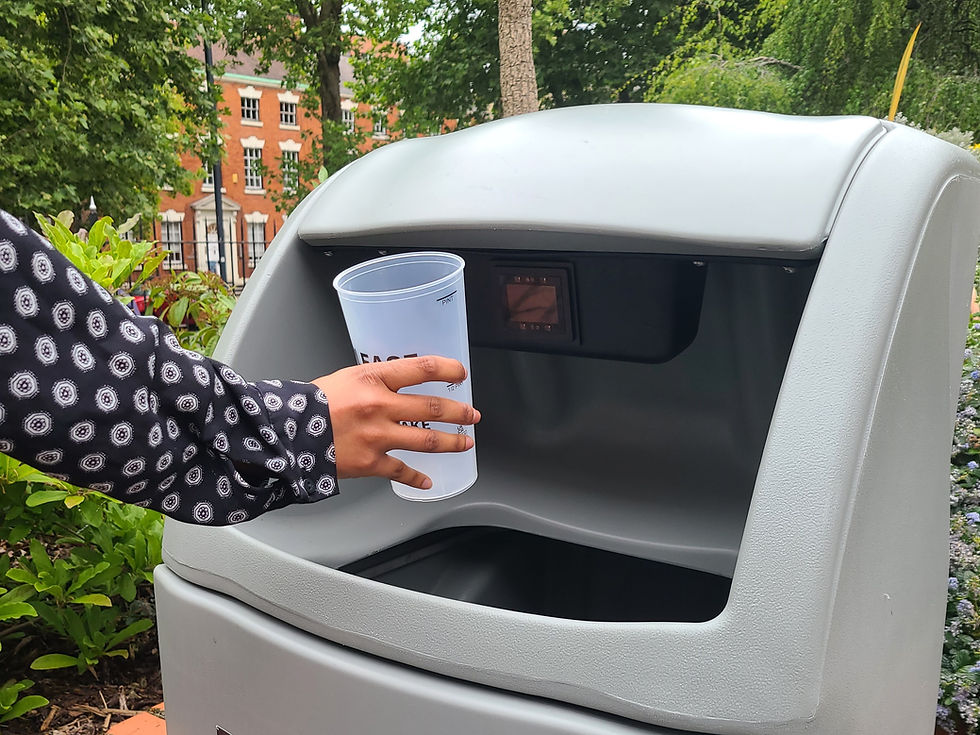
We also offer smart bins and RFID tracking systems for automated deposit refunds, sustainability reporting, and operational efficiency. Circulayo enables brands, venues, and operators to build scalable, compliant, and data-driven circular systems that reduce waste and deliver measurable ESG impact.

Speak to us to see how you can implement a DRS in your business and stay ahead of upcoming legislation.