

Circular Economy Myths We're Leaving Behind in 2025

We're at a turning point. The circular economy has moved from fringe concept to mainstream conversation, yet persistent myths continue to hold us back from meaningful change. As we move forward, it's time to challenge these misconceptions and embrace a more nuanced understanding of what circularity truly means.
Here are five circular economy myths we're finally leaving behind.
Myth #1: “The Circular Economy is Just Recycling”
Why It Persists
Recycling has been our environmental "gateway drug" for decades. It's tangible, visual, and makes us feel like we're doing something. So when circular economy emerged, many simply rebranded their recycling programmes and called it a day.
The Reality
The circular economy encompasses far more than end-of-life waste management. According to research from the Ellen MacArthur Foundation, true circularity involves rethinking entire systems, from product design and business models to consumption patterns and material flows. Recycling sits at the bottom of the circular hierarchy, after reduction, reuse, repair, refurbishment, and remanufacturing.
Researchers at Leuphana University emphasise that focusing solely on recycling misses the bigger picture: preventing waste from being created in the first place. When we design products for longevity, modularity, and disassembly, we create value that recycling alone could never capture.
Myth #2: “Circular Business Models are Too Expensive”
Why It Persists
Linear thinking has dominated business for over a century. Switching systems feels costly, risky, and complicated. The upfront investment in redesigning products, rethinking supply chains, and building new infrastructure can seem daunting.
The Reality
Whilst initial investments exist, circular business models often prove more profitable in the long run. Research from multiple sources demonstrates that circular approaches reduce material costs, create new revenue streams, and build customer loyalty.
The Danish Design Centre notes that the perceived cost barrier often stems from comparing circular models to subsidised linear systems that externalise environmental costs. When we account for resource price volatility, regulatory risks, and reputational value, circular models frequently outperform traditional approaches.
Myth #3: “Only Big Corporations Can Implement a Circular Economy”
Why It Persists
Headlines often feature major brands launching circular initiatives with substantial budgets and resources. This creates an illusion that circularity requires enormous scale and investment to be viable.
The Reality
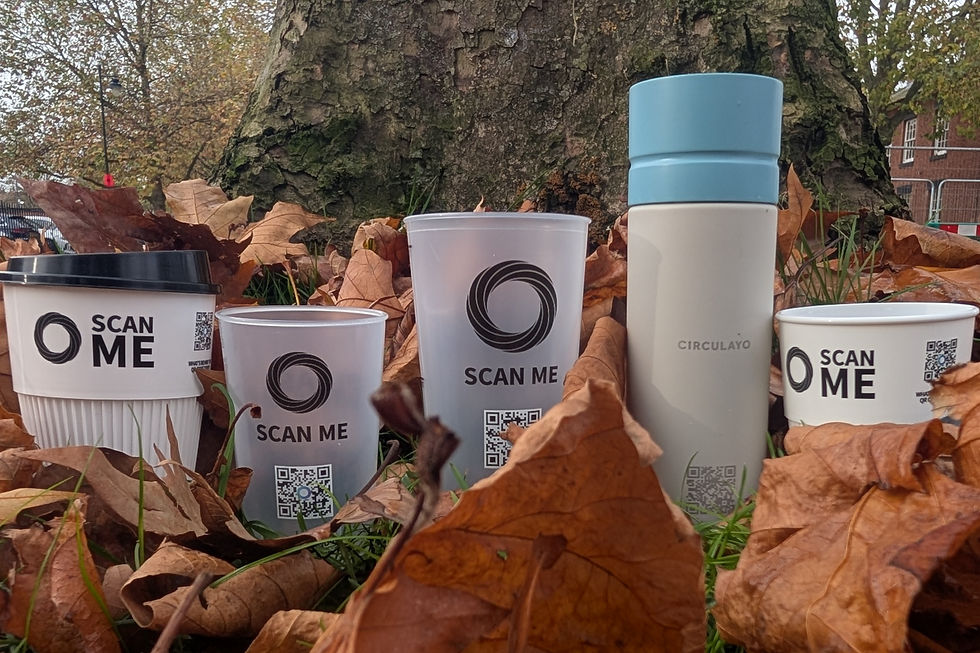
Small and medium enterprises are often better positioned to implement circular strategies due to their agility and closer customer relationships. Research highlighted by Yuma Labs shows that circular principles can be applied at any scale. At Circulayo, we work with businesses of various sizes and industries, ranging from small charitable community spaces to large sporting stadiums, to implement reusable cup systems at scale.
In fact, many circular innovations originate from smaller players who aren't constrained by legacy systems and infrastructure. The barrier isn't size; it's the mindset and willingness to embrace circular practices.
Myth #4: “It’s All About Consumer Behaviour”

Why It Persists
Focusing on individual choices feels empowering and politically neutral. Campaigns about recycling properly, buying less, or choosing sustainable products place responsibility squarely on consumers' shoulders.
The Reality
Whilst consumer choices matter, research from Discard Studies emphasises that the vast majority of waste and resource use occurs in industrial and production processes, not household consumption. Focusing predominantly on consumer behaviour deflects attention from the systemic changes needed in design, manufacturing, and business models.
The missing social aspect of circular economy, as highlighted in recent Springer Nature Link research, shows that structural issues (policy frameworks, industrial design standards, and corporate practices) drive material flows far more than individual purchasing decisions. Consumers can only choose from what's available to them.
Myth #5: “The Circular Economy Is a New Trend”
Why It Persists
Every few years brings a new business buzzword; from "going green" to "sustainability" to "net zero." It's easy to see circular economy as just another fleeting concept that will fade when the next trend emerges.
The Reality
The circular economy isn't a trend; it's a fundamental response to resource constraints and economic reality. Circular concepts have been around for decades - from industrial ecology in the 1980s to cradle-to-cradle design in the 1990s. What's changed is that these ideas are now backed by urgent necessity and institutional power.
Unlike previous sustainability buzzwords, circular economy is being embedded into hard policy; the EU's Circular Economy Action Plan, China's promotion laws, increase in DRS schemes across Europe, and growing global regulations. The growing global regulations is turning circularity from a concept and amibition into a requirement, driving the growth circularity.
As we leave these myths behind, we're moving towards a more sophisticated understanding: the circular economy is systemic, imperfect, accessible, and fundamentally about redesigning how we create and use products. It's a framework for making better decisions at every level — from individual purchases to global supply chains.
Technology plays a critical supporting role in making this shift workable, providing the data, visibility, and infrastructure needed to turn circular intent into repeatable, scalable systems.


